
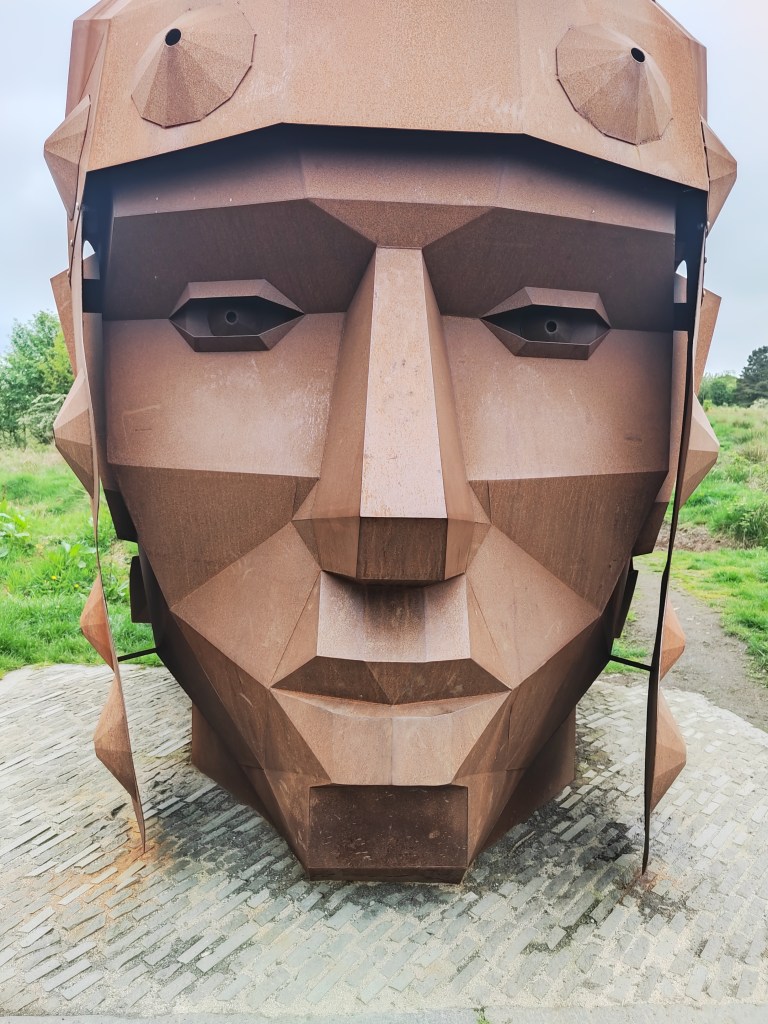
Just to the north of the Central Lowlands in Scotland, the Romans built their northernmost border wall, The Antonine Wall. Around mid-way along the route of the wall, there is a sculpture of a Roman soldier’s head that can be considered nothing less than monumental in its scale. The sculpture is sited at Croy Hill, along a footpath which is not too far from Croy Hill Roman fort. So, who created this sculpture? Why did they create it and for what purpose?
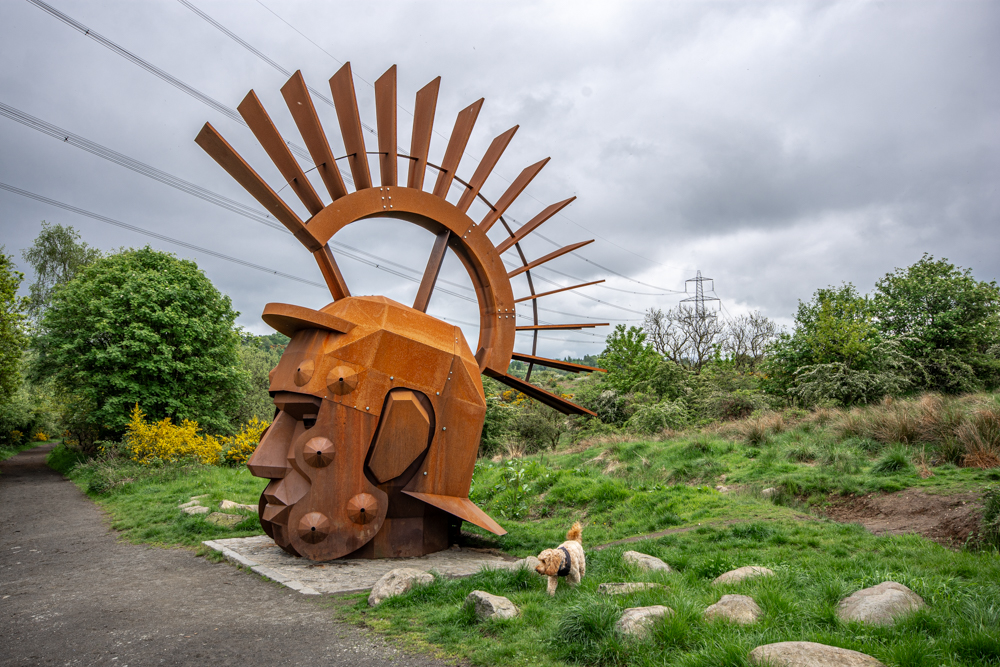
The sculpture Silvanus, which is situated at Croy Hill, Kilsyth, appears to have been commissioned through a project called Rediscovering the Antonine Wall. The project good funding from several local authorities as well as a national lottery heritage fund grant. The initial project was created to site replica distance stones along the route of the wall and provide interpretation, but at two prominent sites, this would also include sculpture. “At two of the five sites, large sculptural installations were proposed to support and promote the ‘rediscovery of the Antonine Wall’. “It appears though that only one of the two sculptures has so far been installed.
The project was envisioned by the same team who were planning to put the replica distance stones in place. It was opened up to bids from various artists who wished to carry out the project. The commissioning process itself spelled out everything from size to structure and even the allocated amount of time to put the installation in place. With a lot of the project already planned out, it was left to those creating the structure to create Silvanus more or less to a pre-approved plan for the space in which the sculpture would reside.
The actual sculpture of the giant Roman soldier’s head complete with helmet was created, cast, and put together by Big Red Blacksmiths, a family business specialising in bespoke ironmongery and metalwork. They worked in collaboration with Svetlana Kondakova Muir on the project to create the artwork which is now situated along the route of the Antonine wall at Croy Hill. The sculpture itself was cast in several pieces and assembled on-site afterwards.
The name Silvanus was chosen for the artwork by way of a public voting campaign, this would also have served as a good way to get some of the local population involved with the project too. Silvanus was a Roman God, a protector of fields and cattle – Three altars to him were found along the Antonine wall. Naming the sculpture after a local religious figure who was found in this area of Roman Britain also serves to link together the identities of the ancient Roman soldiers and the modern population of the area.
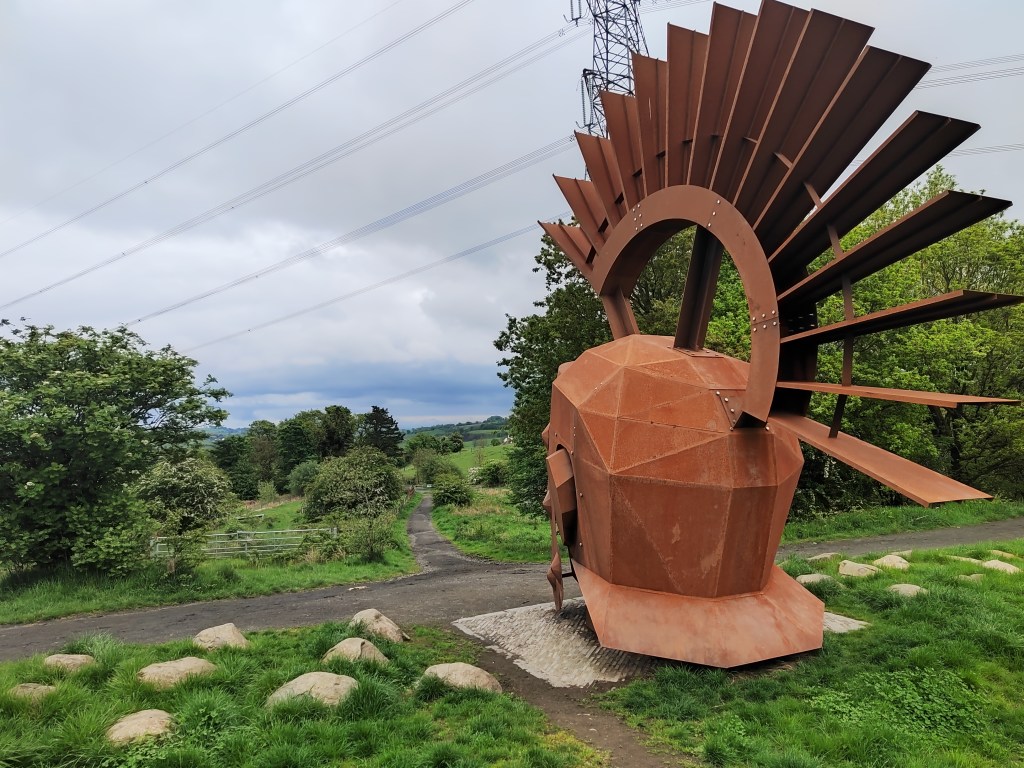
While Silvanus was a project created for a specific role within the landscape connected with the Antonine Wall, it also joins a prestigious group of other statues around the area which are greater than life-sized. This part of the central lowlands of Scotland is home to several interesting artworks all created on a monumental scale – The Kelpies, Big Heid’s, Heavy Horse and Arria. The difference is that all of these artworks have been designed and installed alongside motorways and transport routes whereas Silvanus was installed along a footpath on a hillside.
If you liked this blog, why not help support my work by buying me a coffee. https://www.buymeacoffee.com/aislingonart
Links
https://www.bigredblacksmiths.com/
http://www.svetlanakondakova.com/silvanus.html
https://www.antoninewall.org/news-and-events/news/nethercroy-roman-head-sculpture-artist-commission
https://www.west-dunbarton.gov.uk/council/newsroom/news/2021/oct/antonine-wall-project-wins-prestigious-national-award/
https://www.facebook.com/AntonineWallScotland

 Aisling on Art
Interesting always thought they should have something like this, perhaps a statue of the Emperor Hadrian on the Newcastle side of the Redburgh Bridge as you enter the ity !”
LikeLike