Tullie House, Carlisle.
16th June 2023 – 1st September 2023
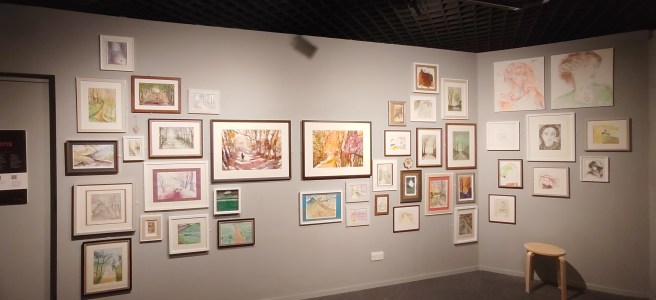
The current exhibition which is taking place in the community gallery in the Tullie House Museum and Art Gallery in Carlisle is called Creative Expression. This exhibition takes a series of Victorian artworks and displays them in a small gallery space placed in opposition to a selection of paintings created by Tullie House’s own art group in response to the Victorian artworks.
The art group utilised works by John Atkinson Grimshaw, Ford Maddox Brown, Frederic Leighton, and Dante Gabriel Rossetti as the inspiration for the works they created for this exhibition. At first glance, the two opposing sets of artworks appear independent and completely unrelated. However, after a few moments of closer examination, you begin to notice the similarities where the arts group artists have responded to the style and form of the Victorian-era paintings which share their gallery.
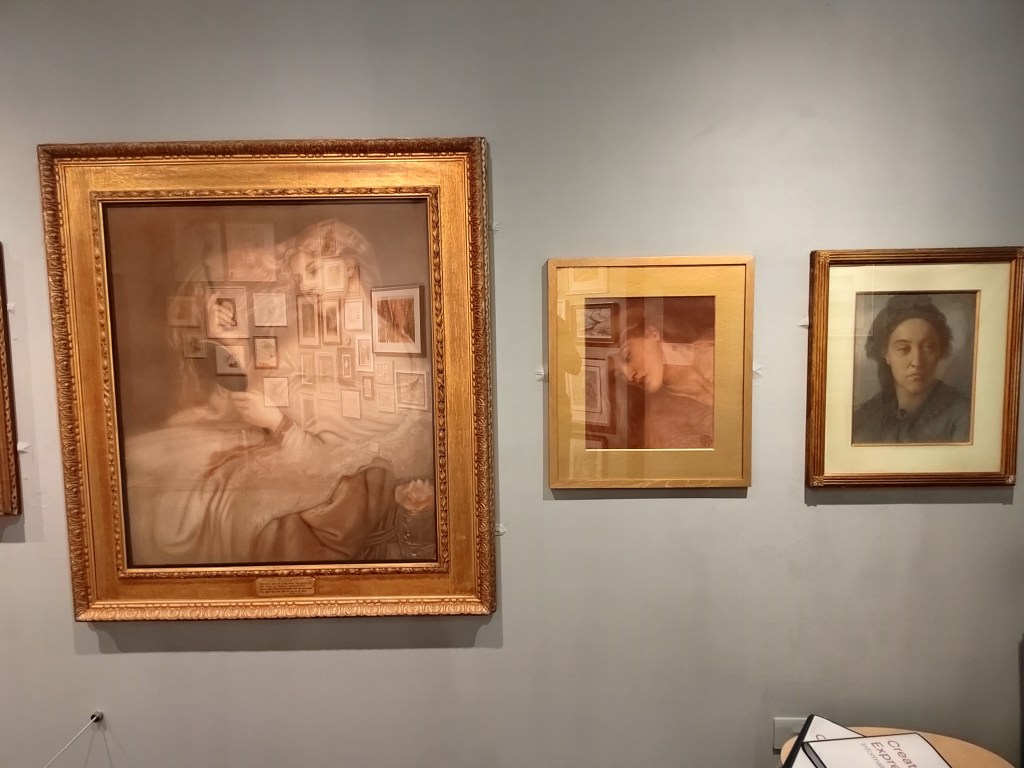
The paintings on the Victorian side of the room range from quite intimate feeling portraits at the beginning of the exhibition to much more anonymous works at the far end which have an indistinct lone person walking within them. Dante Gabrielle Rosetti’s sketch of his wife Christina is the first image that the viewer is exposed to. This is a small, personal-feeling chalk-on-paper portrait that is quite softened in style and has few hard lines or edges throughout. It’s a good and realistic portrait which leaves Christina Rosetti looking profoundly serious. The following two artworks, both by the same artist are called Head of Andromeda, and Lady Lilith, both of these have been constructed in a similar chalk style, and in the case of Lady Lilith, the detail is exceptionally soft.
This iteration of Lilith was modelled by fellow Pre-Raphaelite Fanny Cornforth, though in the finished painting she was replaced by Alexa Wilding who can be seen in the composition Head of Andromeda, the second picture in this series.
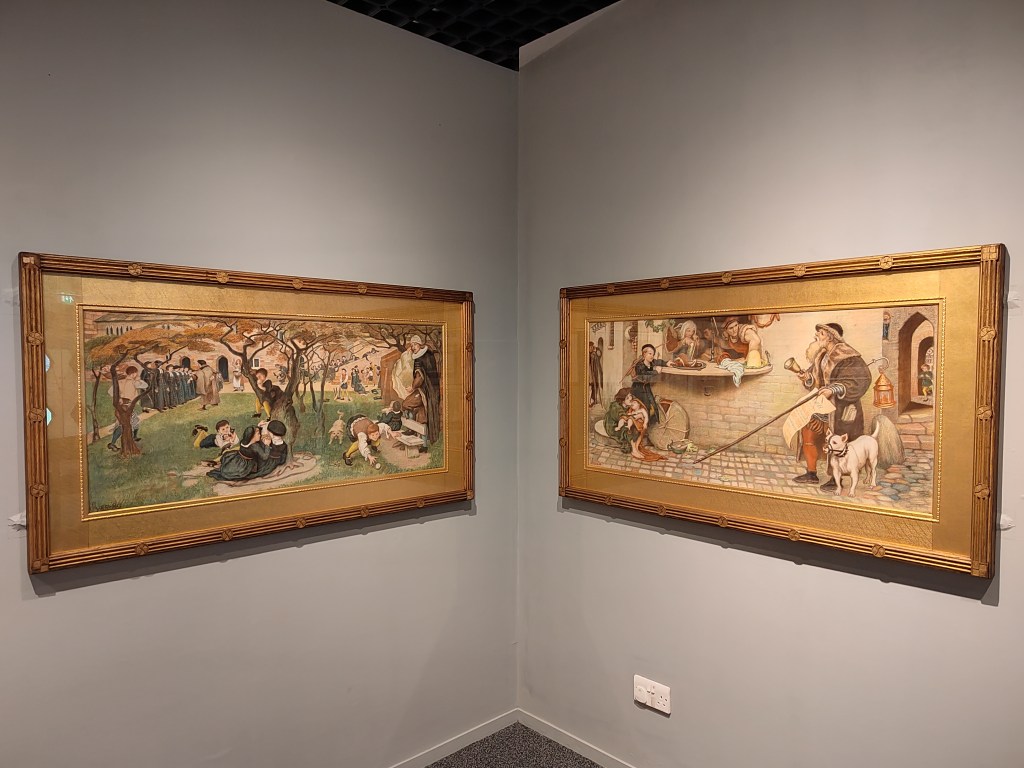
The central pictures for this side of the exhibition are two preparatory drawings that Ford Maddox Brown completed as he was designing a series of twelve murals to go inside Manchester Town Hall. He had always wanted to be a mural painter, so for him, this project was just what he was looking for. His mural series was to be a collection of twelve images distributed around the building. Towards the end of the project, Maddox Brown was in relatively I’ll health, he passed away a few months after the completion of his project. Both of these preliminary sketches by Maddox Brown are extremely lively, vibrant, and colourful. It is easy to see how he planned to upscale these into full-sized murals with plenty of little details to capture the eye and delight those who see them. The first of these, The Proclamation of Weights and Measures is a delightfully composed market scene marking the occasion in 1566 from which traders in Manchester were required to use standardised weights and measures to sell their wares. However, he painted the date wrong, and it is displayed as a decade earlier than it should have read. The scene shows a street crier reading out the proclamation in front of a shop selling meats and cheeses. The occupants of the shop are looking out from their stall in a rather furtive manner, as though they have been doing something wrong or plan to continue doing so. The architecture in this drawing looks slightly more Mediterranean than it does northern English, this may be a reference to the fact that Brown was trying to emulate the Renaissance Mediterranean artists whose murals he had previously been made aware of.
The other of his murals on display is Chethams Life Dream. This drawing also has this very same vibrancy deeply rooted within its composition. This was to be turned into a mural based on Humphreys Chethams philanthropy. He was a wealthy cloth merchant who used some of his money to fund a school for disadvantaged boys. The children within the picture can clearly be seen playing, reading, taking part in school activities, and enjoying a generally nice scholarly lifestyle. While it is slightly reminiscent of Bruegel’s Children’s Games, it contains a much scaled-back ambition in regard to content, focusing instead on the dream of a school itself.
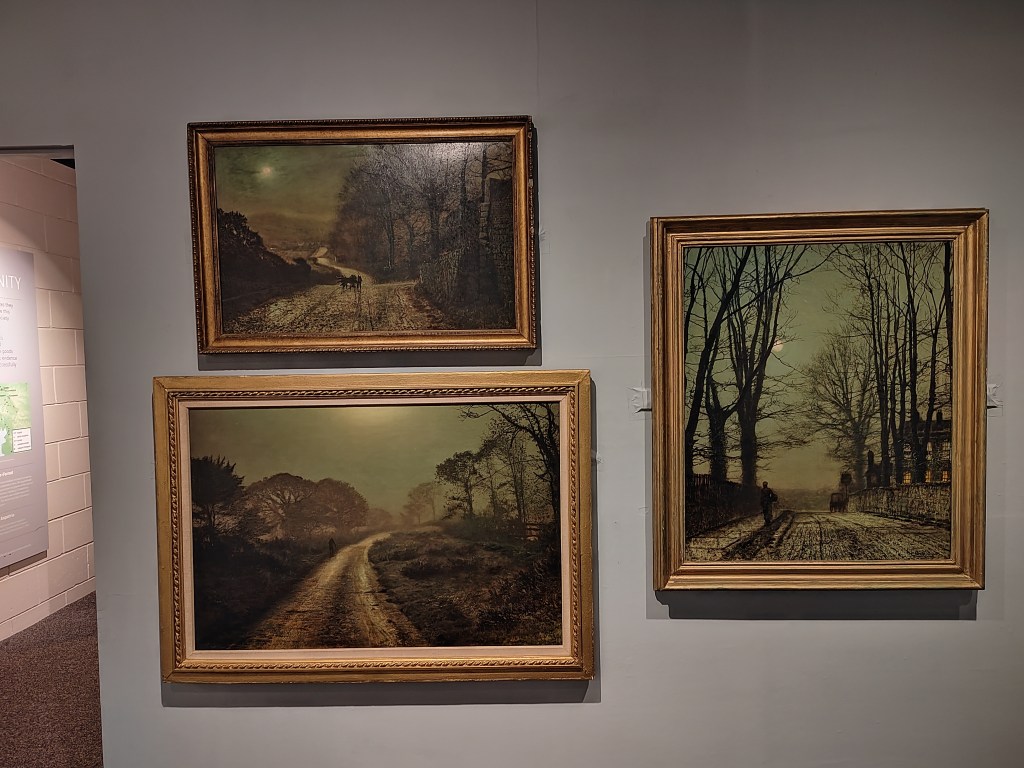
The last three of the Victorian era pictures displayed are all by John Atkinson Grimshaw, two are oil on canvas, and one is oil on board. The paintings are titled Putney Park Lane, The Wagoner, and Misty Moonlight. All three of these scenes are night landscapes of roadside scenes which are illuminated by the full moon, one is a scene set in London, another is set in Leeds and the third contains an unknown location. The three of his paintings all have the same slightly ethereal quality of light and a softening of shadows and edges as he has rendered everything in each scene as either shadow or moonlight with completely cloudless skies.
The Grimshaw paintings all appear to have been painted, or at least composed during the late autumn to the spring season, as in only one of the three do the trees have leaves and even then, they are quite sparsely placed. The theme of the lonely walker out in the night or an abandoned cart on the road adds depth and personality to the scenes and is a theme that wouldn’t look out of place if used by a modern twenty-first-century painter. These touches of reality make his paintings appear human in scale, as without some props set within the composition, the eye just wanders around. When there is nothing in the image with which to compare the scale, the trees can take on other forms and could either become overgrown bushes or huge behemoths of trees like what is found in a rainforest.

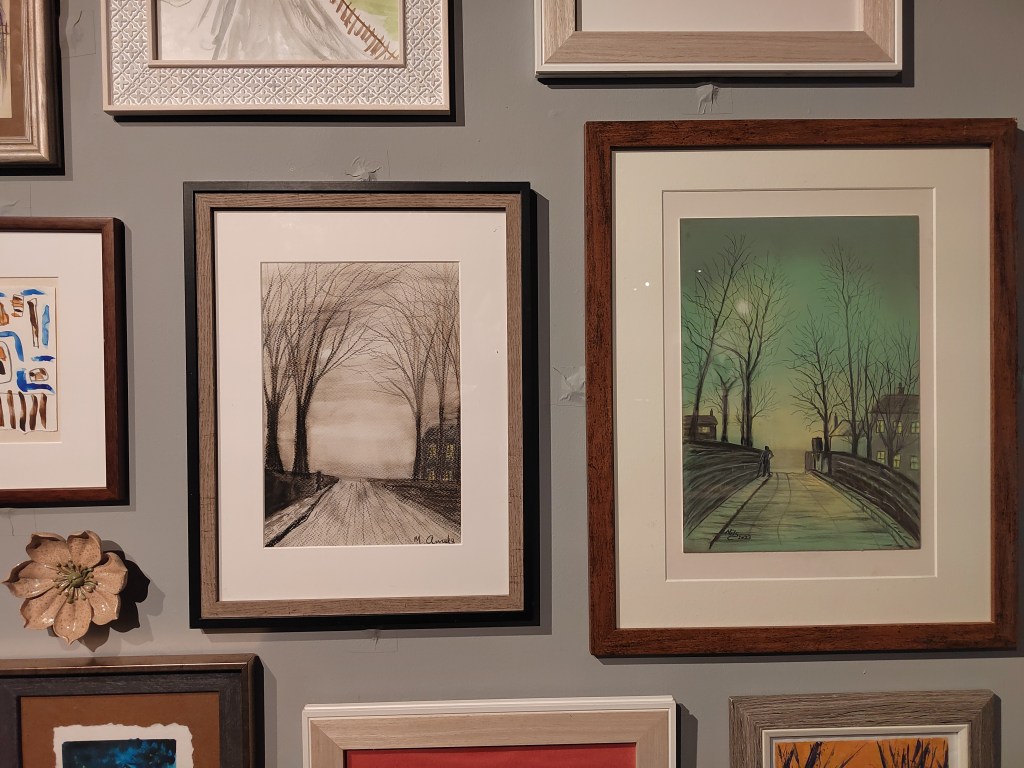
Standing in direct opposition to these very extraordinary Victorian artworks and complimenting them through the use of the very same compositional features that their artists used is an absolute plethora of modern artworks. This eclectic selection was created by the arts group which is associated with the Tullie House Museum and art gallery. Around a third of these pictures have been composed with a direct reference to Grimshaw’s work, a fair few of these have attempted to use his style of realism, and others are extremely colourful and stylised, almost abstractions that contain similar compositional features to those utilised by Grimshaw.
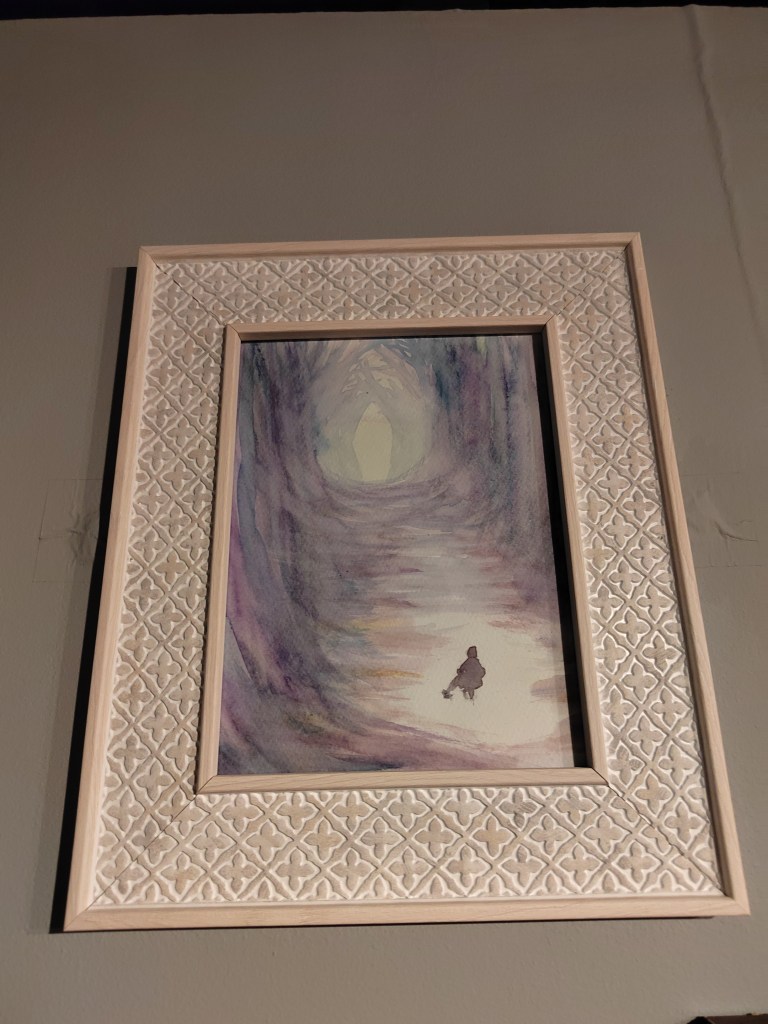
Some of the works which have taken inspiration from Grimshaw contain similar moonlight, while others don’t. They all however appear to have used shadows and tonality as a method to bring out the details which the artist wishes in order to evoke a certain sense of wonder or menace. The few that really stood out of the crowd to me were the more abstract feeling compositions.
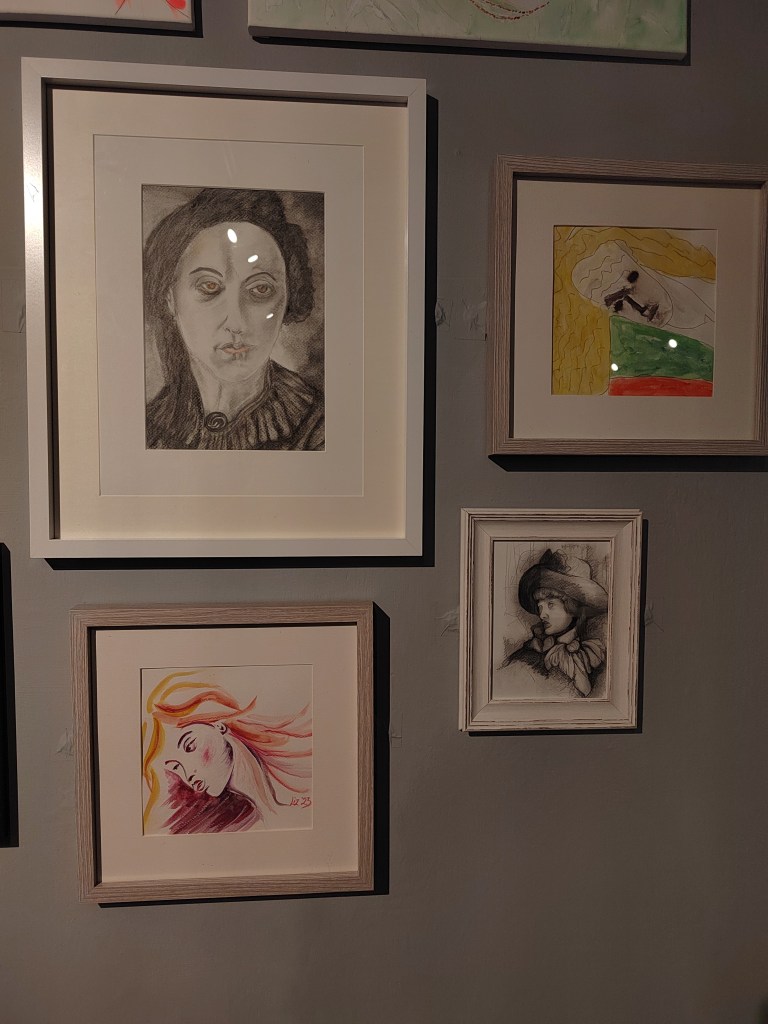
There is a group of three portraits, nestled among a wider segment of the display which contains portraiture, these really do appear to embody the ethos of Victorian-era art. These couple of artists have interpreted Rossetti and Leighton’s work in a manner that holds up a clear reference to the styles which those artists used. They have used the associated pictures as inspirational stepping points on which they can establish their own mark, they have even managed to catch the emotion which is embodied within those images too.
There are many other works within this collection which is currently displayed in the community gallery. There are a total of twenty-three contributing artists, and a whole range of complimentary styles and approaches to art on display which have all been arranged to complement and contrast with each other and also to help draw the eye to make those comparisons between pieces which helps the viewer to comprehensively analyse the artworks of the group on a collective, as well as an individual level.
If you liked this blog, why not help support my work by buying me a coffee. https://www.buymeacoffee.com/aislingonart

 Aisling on Art