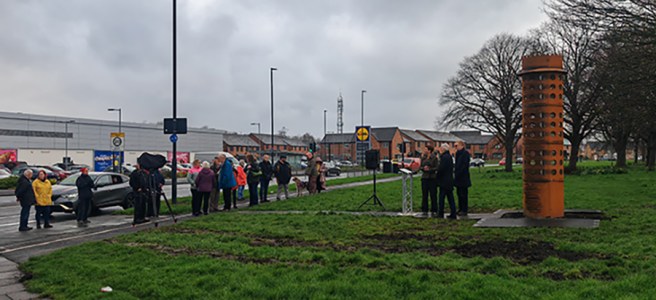
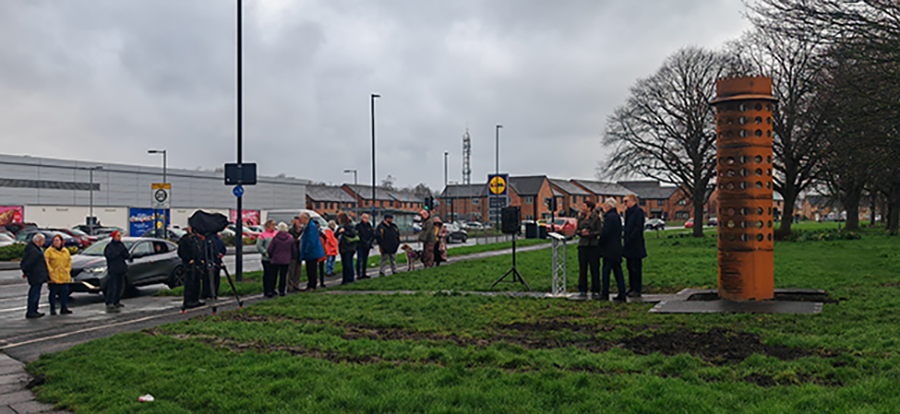
On Wednesday 20th March 2024, a new sculpture was ‘unveiled’ in the Killingworth / West Moor area of North Tyneside. The day was a bit grey, the drizzle departing, and a small crowd of onlookers turned out to witness the event. There were reporters, bloggers, dignitaries, and people from the local history society present among those who turned out on the afternoon.
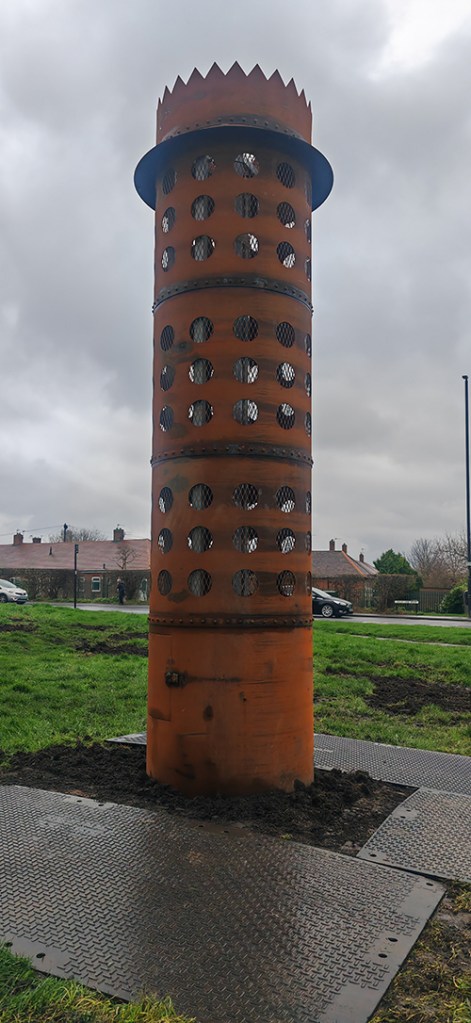
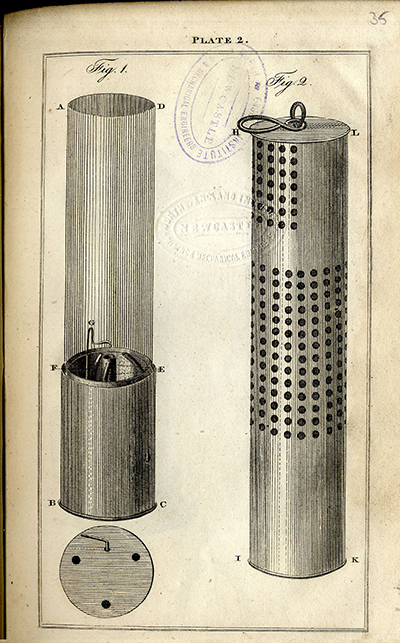
The artwork of Stephenson’s safety lamp (The Geordie Lamp) is based on the design of George Stephenson’s lamp, which he designed around the same time as Sir Humphrey Davy designed his mining safety lamp. As Stephenson wasn’t formally educated, the scientific community decided that Davy’s amp was the one to recommend to miners. Stephenson’s was in fact superior.
It has been placed beside a roundabout in West Moor, opposite a Lidl store as this location is not far from where George Stephenson lived in the local area for a time, at Dial Cottage. Funding for the sculpture came from Lidl as a part of the conditions of their development across the road.
The sculpture was created by Andy Mayers, a Derbyshire artist who lives close to where Stephenson was buried. He constructed the sculpture from weathering steel, a steel which is designed to rust and generate a ruddy patina over time. As well as the mining lamp, the crenellated top of the artwork also references the design of Stephenson’s first steam engine, Locomotion Number One.

Local mayor Dame Norma Redfearne, the mayor came out to give a brief speech about the lamp and how Stephenson fit into local history before switching on the light which is lit on the inside of the sculpture.
Links
Andy Mayers https://mayr-z.com/sculptural/

 Aisling on Art
Quite interesing especially comparing the sculpture wih Stephensons drawings and the crenalation I can understand now but this rusty finish like Anthony Gormlys “Angel Of the North” and Ray Lonsdales “Tommy” sculpture at Seaham seems to be a popular thing at he moment ?!
LikeLike
Yes, I think sculptures with this particular style of finish are very popular at present. There are quite a number of them in the north east.
LikeLike